Heavy machines often work in mud, rock, and extreme pressure. What keeps their tracks moving smoothly every day? The Track Roller is a small part with a big job in crawler equipment like excavators and bulldozers. Poor roller design can cause vibration, fast wear, and costly downtime. In this article, you will learn how modern engineering improves Track Roller durability using materials, heat treatment, and structural design.
How Track Roller Systems Support Heavy Machinery Performance
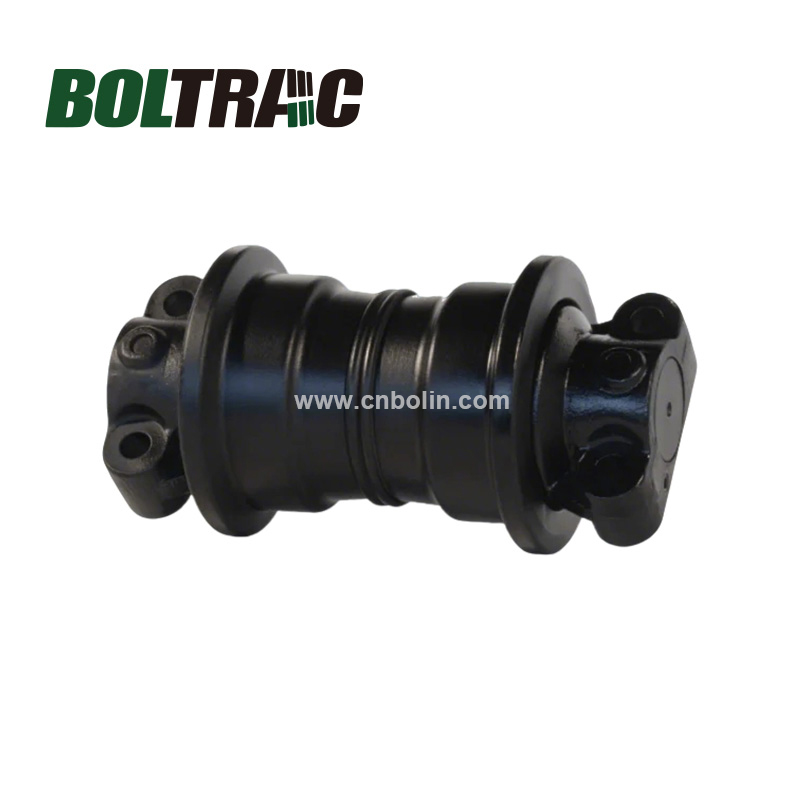
The Core Function of a Track Roller in Crawler Equipment
In crawler-based machinery such as excavators, bulldozers, and mining vehicles, the track roller plays a foundational role in keeping the entire undercarriage system stable and operational. Positioned along the track frame, these rollers support the machine’s weight while guiding the track chain as it moves across uneven terrain. Without properly engineered rollers, the track system would struggle to maintain smooth motion, especially under heavy loads or during continuous operation.
A well-designed track roller performs several critical tasks simultaneously. It distributes the weight of the equipment along the lower track path, allowing the machine to maintain consistent ground contact. This is particularly important for heavy machinery working on loose soil, rocky surfaces, or muddy environments where traction and balance are essential. At the same time, the roller helps guide the track links so they move in a controlled and aligned path.
Key operational functions include:
● Supporting equipment weight and preventing excessive stress on the track chain
● Guiding the track’s movement to ensure smooth rolling across terrain
● Maintaining track alignment to reduce derailment or lateral displacement
Because these rollers are constantly exposed to mechanical stress and friction, their design must balance strength, durability, and rotational efficiency to keep crawler equipment performing reliably.
Load Distribution and Undercarriage Stability
Heavy machinery can weigh several tons, and that load must be managed carefully to avoid premature wear on the undercarriage. Track rollers play a central role in distributing this weight evenly across the track system. Instead of concentrating stress in a single point, multiple rollers share the load along the length of the track frame, improving overall stability and reducing strain on individual components.
When load distribution is properly managed, several benefits follow. The track chain experiences less localized pressure, which slows down wear on the links and bushings. At the same time, other undercarriage components—such as drive sprockets and idlers—operate under more balanced conditions, extending their service life. This balanced force transfer also improves machine control, particularly when operating on slopes or uneven ground.
The relationship between track rollers and other undercarriage parts can be summarized as follows:
Component | Role in the System | Benefit to Equipment |
Track Rollers | Support and distribute machine weight | Reduce stress concentration |
Track Chain | Transfers motion and traction | Maintains contact with terrain |
Drive Sprocket | Delivers engine power to the track | Enables propulsion |
Idler Wheel | Maintains track tension and alignment | Stabilizes track movement |
Through this coordinated system, track rollers ensure that heavy equipment remains stable while carrying large loads across demanding work environments.
Environmental Stresses Faced by Track Rollers
Track rollers operate in some of the most demanding environments in industrial machinery. Construction sites, mining operations, and forestry areas expose these components to a constant combination of mechanical and environmental stress. Over time, these conditions can accelerate wear and reduce performance if the rollers are not engineered to handle them.
One of the primary challenges is abrasive wear. Materials such as sand, gravel, and broken rock continuously grind against the roller surface as the track moves. This friction gradually erodes metal surfaces and increases resistance within the undercarriage system. In mining or quarry operations, where sharp rocks and mineral debris are common, abrasion becomes even more severe.
Beyond abrasion, track rollers must also withstand repeated shock loads and vibration. As heavy equipment travels across uneven terrain, impacts are transferred through the track system into the rollers. These forces can cause fatigue over time if the roller structure lacks sufficient toughness.
Environmental exposure adds another layer of complexity. Common stress factors include:
● Mud, dust, and debris contamination, which can enter bearings and cause internal wear
● Extreme temperatures, from freezing climates to high heat generated during operation
● Moisture and chemical exposure, which can lead to corrosion if protective treatments are inadequate
Because of these combined stresses, modern track roller systems rely on durable materials, advanced sealing solutions, and precise engineering to maintain reliable performance in harsh operating conditions.
Material Engineering Behind Durable Track Rollers
High-Strength Steel Alloys in Track Roller Manufacturing
Durability in a track roller system begins with selecting materials capable of withstanding heavy loads and constant mechanical stress. Since these components support large crawler machines during continuous movement, manufacturers typically rely on high-strength carbon steels and alloy steels that combine structural strength with long-term fatigue resistance. Materials such as C45 carbon steel are widely used because they provide a practical balance between tensile strength and machinability while maintaining reliable durability during long operating cycles.
In more demanding environments, alloy steels enhanced with elements such as chromium, molybdenum, or manganese are often preferred. These additions improve hardness and resistance to deformation without making the material excessively brittle. A track roller that is overly hardened may crack under repeated impact, while one that is too soft will wear rapidly. Engineers therefore aim to achieve a balanced microstructure that can tolerate both load stress and repeated vibration from rough terrain.
Surface Protection for Corrosion and Wear Resistance
Even when high-strength steel forms the base structure, the outer surface of a track roller remains exposed to abrasive particles, moisture, and chemical contaminants. Over time, sand, gravel, and debris moving along the track chain can gradually erode untreated metal surfaces. Surface protection techniques are therefore applied to slow down wear and preserve the integrity of the roller.
Chrome plating is commonly used because it forms a hard and smooth external layer that resists scratching while reducing friction between the roller and the track links. Zinc coatings are another practical solution, particularly in humid or coastal environments where corrosion risks are higher. In certain applications, stainless steel components or corrosion-resistant alloys may be selected to improve durability in chemically aggressive or wet operating conditions.
These treatments protect the base metal from oxidation and abrasion while helping maintain a consistent surface finish, which supports smoother rolling contact during operation.
Bearing Materials and Internal Component Durability
Inside each track roller, the bearing assembly ensures that the roller rotates smoothly while supporting both radial and axial forces generated by machine movement. If internal components fail, the roller may rotate unevenly or seize entirely, placing additional stress on other undercarriage parts such as the track chain or sprocket.
High-grade bearing steels are commonly used because they provide excellent hardness and fatigue resistance under repeated loading cycles. However, material quality alone cannot guarantee long service life. The internal bearing system must also be protected from contamination. Dust, mud, water, and abrasive particles can quickly damage internal components if they enter the assembly.
For this reason, sealed bearing systems are frequently integrated into modern track roller designs. These seals retain lubricants within the assembly while blocking external contaminants, allowing the bearings to operate in a cleaner and more stable environment. Reduced friction and consistent lubrication help maintain smooth rotation even under heavy operating conditions.
Selecting Materials Based on Working Conditions
Material choices for track rollers often depend on the specific environment in which the equipment operates. Different industries expose machinery to distinct types of stress, and engineering decisions typically reflect those operational conditions.
Equipment Environment | Material Focus | Engineering Priority |
Construction equipment | Hardened carbon or alloy steel | Balanced durability and cost |
Mining machinery | Highly wear-resistant alloy steel | Resistance to abrasion and heavy loads |
Forestry and agriculture | Corrosion-resistant materials and coatings | Protection against moisture and organic debris |
Construction equipment generally requires materials that offer a reliable balance between strength and cost efficiency because machines operate across varied terrain. Mining operations place greater emphasis on wear resistance due to constant contact with rock fragments and abrasive minerals. Forestry and agricultural machinery, on the other hand, often face prolonged exposure to moisture, soil, and plant residue, making corrosion resistance an important consideration.
Heat Treatment and Surface Hardening in Track Roller Manufacturing
Quenching and Tempering for Structural Strength
Track rollers used in heavy crawler equipment must endure repeated impacts from uneven terrain, heavy loads, and constant vibration. To handle these stresses without structural failure, manufacturers rely on quenching and tempering processes that modify the internal structure of the steel. During quenching, the heated steel component is rapidly cooled, increasing surface hardness. It is then reheated in a controlled tempering stage to restore toughness and reduce brittleness.
The result is a microstructure where the outer layer remains hard enough to resist deformation while the internal core stays ductile and capable of absorbing shock. This “hard surface, tough core” structure is particularly valuable in construction and earthmoving equipment where sudden impacts are common. When rollers encounter rocks, debris, or uneven ground, the tempered core helps prevent cracking while the hardened exterior resists wear.
Rather than simply maximizing hardness, engineers aim for a balance between impact resistance and structural strength, ensuring that the roller maintains reliability over long operating cycles.
Induction Hardening for Surface Wear Resistance
While quenching and tempering improve the overall strength of the roller body, the outer contact surface requires additional protection because it is constantly in contact with track links and abrasive materials. Induction hardening is widely used to strengthen this critical region without affecting the entire component.
This process uses electromagnetic induction to heat a targeted area of the steel surface, followed by rapid cooling. Only the outer layer is hardened, leaving the underlying material relatively tough and flexible. The hardened surface typically reaches significantly higher hardness levels than untreated steel, making it far more resistant to abrasion and surface fatigue.
Induction hardening is particularly useful in applications where track rollers operate on rocky terrain or coarse gravel. The hardened rim helps prevent grooves, flattening, and surface deformation that would otherwise occur after prolonged contact with moving track chains. By reinforcing the areas exposed to the most friction, this treatment helps extend operational life while maintaining smooth rolling performance.
Hardfacing Technologies for Extreme Abrasion
Certain industries expose track rollers to conditions that exceed the capabilities of conventional surface treatments. Mining and quarry operations, for example, involve constant exposure to sharp rocks and mineral debris that can rapidly erode steel surfaces. In these situations, manufacturers may apply hardfacing layers to further increase wear resistance.
Hardfacing involves welding a layer of extremely hard material onto high-wear surfaces of the roller. Tungsten carbide is one of the most commonly used materials because it offers exceptional hardness and abrasion resistance. Once applied, this protective layer forms a durable shield against grinding contact from rock fragments and mineral particles.
Applications where hardfacing is frequently used include:
● Open-pit mining equipment
● Quarry and aggregate processing machinery
● Heavy earthmoving operations in rocky terrain
Because the added layer absorbs much of the abrasive damage, the underlying steel structure remains protected during prolonged operation. In high-wear environments, hardfaced rollers can last significantly longer than standard components while maintaining consistent track performance.
Structural Design and Sealing Technologies in Track Roller Systems
Precision Manufacturing and Machining Accuracy
The structural reliability of a track roller system depends not only on materials and heat treatment but also on manufacturing precision. Modern production typically relies on CNC machining to achieve highly accurate dimensions on critical surfaces such as bearing seats, roller shells, and mounting interfaces. Even minor deviations in roundness or alignment can create uneven contact between the roller and the track chain, which over time leads to vibration and accelerated wear.
Precision machining ensures that the roller rotates smoothly under load while maintaining proper alignment with surrounding undercarriage components. When the geometry of the roller shell and internal bearing surfaces is controlled within tight tolerances, friction and imbalance are significantly reduced. This contributes to more stable machine movement, especially in equipment that operates continuously over rough ground.
In large crawler machinery, small geometric inaccuracies can quickly multiply into noticeable operational problems. High-precision manufacturing therefore plays a direct role in maintaining smooth rotation, minimizing vibration, and preventing premature wear inside the roller assembly.
Flange Design for Track Guidance
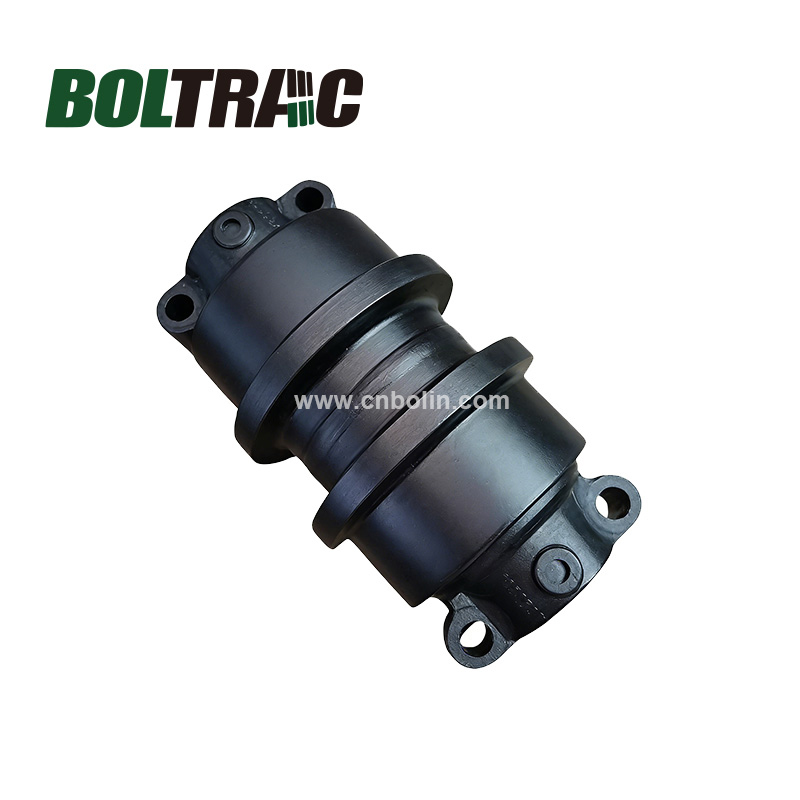
Flanges on track rollers help guide the track chain and keep it aligned during machine movement. Depending on the application, rollers may feature either single-flange or double-flange configurations. The choice affects how the track behaves when the machine travels across uneven or sloped terrain.
Single-flange rollers guide the track from one side while allowing a limited amount of lateral movement. This design is sometimes used in lighter equipment or in systems where other components assist with alignment. Double-flange rollers, in contrast, provide guidance on both sides of the track links. By centering the track more firmly, they improve stability when machines operate in rocky or irregular environments.
Flange Configuration | Design Characteristic | Typical Use |
Single-flange roller | Guides track from one side | Lighter equipment or controlled terrain |
Double-flange roller | Provides guidance on both sides | Heavy machinery and rough terrain |
Machines working in construction, mining, or demolition often rely on double-flange designs because the track is less likely to shift laterally when encountering obstacles or uneven ground.
Advanced Sealing Systems to Prevent Contamination
Track rollers operate close to the ground, where dust, water, and debris are constantly present. Without effective sealing systems, these contaminants can enter the bearing assembly and quickly damage internal components. Modern designs therefore rely on specialized sealing structures that isolate the internal mechanism from the surrounding environment.
Two sealing approaches are commonly used. Labyrinth seals create a complex path that contaminants struggle to pass through, while still allowing smooth rotation of the roller. Double-lip seals provide an additional barrier by pressing flexible sealing edges against the rotating surface, helping to block mud, water, and fine particles from entering the assembly.
These sealing solutions also help retain lubrication inside the roller housing. When the internal environment remains clean and properly lubricated, the bearings can operate under heavy loads with far less friction and wear.
Lubrication Strategies for Long Service Life
Lubrication plays a critical role in maintaining smooth motion within the roller assembly. As the roller rotates under load, friction between bearings and internal surfaces generates heat. Without proper lubrication, this heat can lead to metal-to-metal contact, accelerated wear, and eventual bearing failure.
Many track rollers are designed with sealed internal lubrication systems that store grease or oil within the roller body. This reservoir supplies lubricant to the bearing surfaces while protecting it from external contamination. In demanding environments, high-performance lubricants are often selected because they maintain stable viscosity across wide temperature ranges and resist breakdown under heavy mechanical loads.
Inside the roller housing, a stable lubrication film allows bearings to continue rotating smoothly even under continuous pressure and vibration, maintaining consistent movement of the track system.
Conclusion
Durable Track Roller systems rely on strong materials, precise heat treatment, effective sealing, and optimized structural design. These engineering solutions help heavy machinery operate reliably in extreme environments while reducing wear and downtime. Shandong Bolin Machinery Co., Ltd. provides high-quality track roller products designed for durability, stable performance, and long service life, helping customers improve equipment efficiency and lower long-term maintenance costs.
FAQ
Q: What is the function of a Track Roller in crawler machinery?
A: A Track Roller supports machine weight and guides the track chain, ensuring stable movement and balanced load distribution across the undercarriage.
Q: How does Track Roller design affect equipment durability?
A: A well-engineered Track Roller reduces vibration, distributes loads evenly, and minimizes wear on tracks, sprockets, and other undercarriage components.
Q: What materials are commonly used in Track Roller manufacturing?
A: Most Track Roller components use high-strength alloy steels with surface hardening to improve fatigue resistance and withstand abrasive operating environments.
Q: Why are sealing systems important for Track Roller performance?
A: Effective seals protect Track Roller bearings from dust, water, and debris, maintaining lubrication and preventing premature internal component failure.


