Heavy equipment works in some of the toughest environments on earth. But what really determines how long these machines last? The answer often lies in the undercarriage system, especially the Track Roller. In this article, you will learn how high-performance track roller solutions support machine stability, reduce wear, and help operators extend equipment life while lowering maintenance costs and downtime.
Why Track Rollers Are Critical to Heavy Equipment Longevity
Supporting Machine Weight and Load Distribution
In tracked machines such as excavators and bulldozers, the undercarriage carries the majority of the machine’s operational load. Track rollers play a central role in this system by supporting the machine’s weight and distributing it evenly across the track chain and ground contact points. When the load is balanced correctly, the machine remains stable during digging, lifting, or traveling over uneven terrain.
This balanced distribution also protects other undercarriage components. Without reliable rollers, excessive pressure can concentrate on specific track links or frame sections, accelerating wear and increasing the risk of structural stress. High-quality track rollers therefore function not only as rolling components but also as load management elements that maintain the integrity of the entire undercarriage system.
Preventing Excessive Undercarriage Wear
Smooth track movement is essential for reducing friction between the track chain and the undercarriage frame. Track rollers enable this movement by providing a rotating surface that allows the track to travel efficiently while carrying heavy loads. When rollers operate correctly, the track system experiences less resistance, which helps maintain consistent machine performance over long operating hours.
Poorly designed or worn rollers often lead to uneven contact and increased vibration. Over time, this added stress accelerates wear on adjacent components such as sprockets, chains, and idlers. In demanding environments like construction sites or quarries, where abrasive materials and constant impacts are common, the quality of the track roller becomes a decisive factor in determining how long the undercarriage system will last.
Key Characteristics of High-Performance Track Roller Solutions
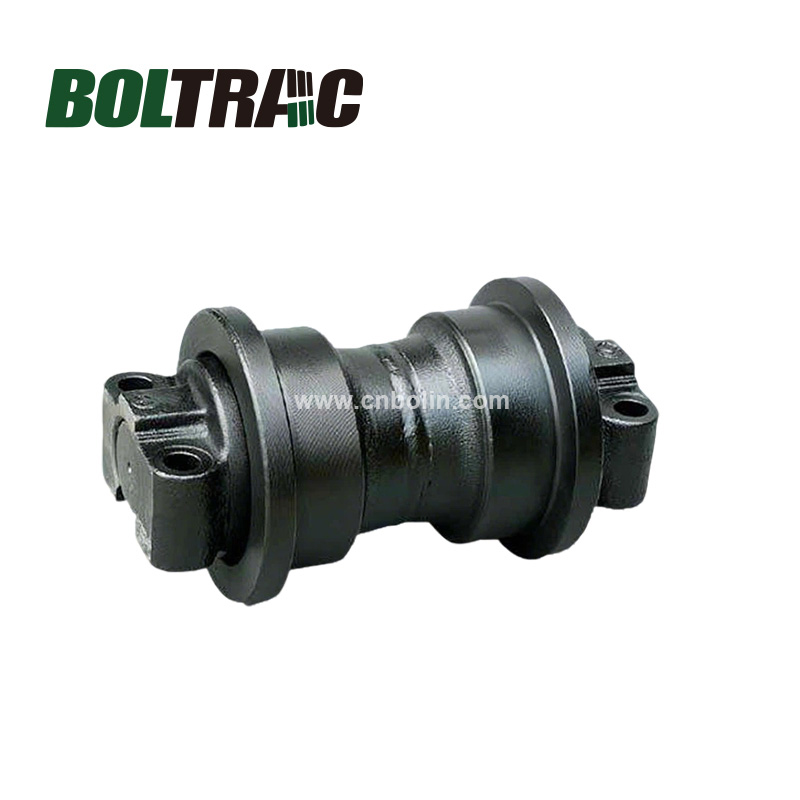
Precision Manufacturing for Reduced Friction
High-performance track rollers rely on precise manufacturing processes to ensure consistent rotation and minimal mechanical resistance. Modern production methods often use CNC machining and controlled finishing techniques to achieve extremely accurate dimensions and smooth bearing surfaces. These tight tolerances reduce friction during operation, which in turn lowers heat generation and slows down component wear.
Accurate machining also helps maintain stable alignment between the roller, track chain, and frame. When the contact surfaces are evenly shaped and balanced, the track moves more smoothly and the entire undercarriage experiences less vibration and stress.
Heat-Treated Materials for Extreme Durability
Because track rollers operate under constant load and abrasive conditions, material strength is essential for long service life. High-performance rollers are typically manufactured from high-strength steel alloys and then treated through specialized heat-treatment processes. These treatments harden the outer surface of the roller while maintaining internal toughness, creating a balance between wear resistance and structural durability.
The hardened surface allows the roller to withstand continuous friction from the track chain, as well as impacts from rocks, soil, and debris commonly found in construction or mining environments. This combination of strong materials and controlled heat treatment significantly improves resistance to deformation and surface damage.
Advanced Sealing and Bearing Systems
Another defining feature of high-performance track roller solutions is the use of advanced sealing and bearing designs. In harsh operating environments, dirt, moisture, and abrasive particles can easily enter mechanical components and damage internal bearings. To prevent this, modern track rollers are equipped with robust sealing systems that keep contaminants out while retaining lubrication inside the assembly.
Effective seals work together with durable bearing structures to maintain smooth rotation under heavy loads. This protection preserves lubrication quality and reduces the risk of corrosion or internal wear, allowing the roller to perform reliably for longer operating periods even in muddy, dusty, or high-impact environments.
Best Practices for Maximizing Equipment Longevity with Track Roller Solutions
Conduct Regular Inspections and Wear Monitoring
In heavy equipment operations, small signs of wear can quickly develop into costly failures if they go unnoticed. Regular inspection of track rollers is therefore essential for maintaining undercarriage reliability. Operators and maintenance teams typically monitor several indicators, including roller diameter reduction, visible cracks on the roller shell, and abnormal movement or “play” during operation. These checks help identify uneven wear patterns or early structural damage before they affect surrounding components.
Routine monitoring also allows maintenance teams to track wear trends over time. For example, measuring the roller diameter periodically can reveal how quickly the component is wearing under specific working conditions. When these measurements approach the manufacturer’s recommended limits, replacing the roller in advance prevents unexpected downtime and protects other undercarriage parts from excessive stress.
Inspection Item | Monitoring Method | Recommended Threshold | Why It Matters |
Track roller diameter | Measure outer diameter using a wear gauge or caliper | Replace when diameter is reduced by about 10% from original size | Prevents uneven load distribution and excessive stress on the track system |
Track chain stretch | Measure pin-to-pin distance across several links | Replace when stretch exceeds 3% of original length | Protects rollers and sprockets from accelerated wear |
Roller surface condition | Visual inspection for cracks, flat spots, or uneven wear | Replace rollers showing cracks or deformation | Reduces vibration and prevents track instability |
Roller movement or looseness | Use a pry bar to check for abnormal play in the roller assembly | Replace when excessive movement is detected | Maintains proper alignment and smooth track movement |
Seal and lubrication condition | Check for oil leaks or grease contamination | Repair seals or re-lubricate when leakage appears | Ensures bearings remain protected from dust and debris |
Maintain Proper Track Tension and Lubrication
Correct track tension is a key factor in ensuring smooth interaction between the track chain and rollers. If the track is overly tight, the rollers must overcome additional resistance during movement, which increases internal pressure and accelerates wear. Conversely, a track that is too loose may cause instability and uneven load distribution along the undercarriage system. Maintaining the recommended track sag helps balance these forces and allows rollers to rotate freely under normal operating loads.
Lubrication is equally important. Proper grease or oil inside the roller assembly reduces friction between moving parts and helps dissipate heat generated during operation. Regular lubrication schedules ensure contaminants are flushed out and prevent internal components from running dry. When lubrication is maintained consistently, the roller assembly operates more smoothly and experiences less internal wear.
Improve Operating Habits
The way equipment is operated in daily work also influences how quickly track rollers wear out. Machines that frequently perform sharp turns or sudden directional changes place uneven loads on the undercarriage, forcing certain rollers to absorb higher stress than others. Over time, this uneven loading accelerates localized wear and can shorten the service life of both rollers and track chains.
Similarly, excessive reversing or traveling at high speeds on hard surfaces increases mechanical resistance within the track system. These practices create additional friction between the rollers and track links, which generates heat and accelerates component fatigue. Adopting smoother operating patterns—such as gradual turns and controlled travel speeds—helps distribute stress more evenly across the undercarriage.
Keep the Undercarriage Clean
Debris accumulation around the undercarriage is another factor that often goes unnoticed during daily operations. Mud, gravel, and compacted soil can become trapped between track components, creating resistance as the track system moves. This buildup forces the rollers to work harder, which increases mechanical stress and accelerates wear on both the roller surface and internal bearings.
Regular cleaning of the undercarriage helps prevent these issues. Removing packed materials at the end of a shift ensures that rollers can rotate freely during the next operation cycle. In environments where machines operate in wet soil or rocky terrain, consistent cleaning practices significantly reduce the likelihood of debris-related damage and help maintain stable roller performance.
Common Factors That Reduce Track Roller Lifespan
Several operational and environmental factors can shorten the service life of a track roller. Heavy equipment often works under continuous load, and the undercarriage absorbs most of the mechanical stress generated during operation. When external conditions or maintenance practices are not properly managed, the rollers experience accelerated wear.
Understanding these factors helps equipment operators identify early warning signs and avoid unexpected failures. In most cases, premature roller damage is not caused by a single issue but by a combination of harsh environments, incorrect track adjustment, and inconsistent maintenance routines. Recognizing how these factors interact is essential for improving undercarriage reliability and extending the lifespan of critical components.
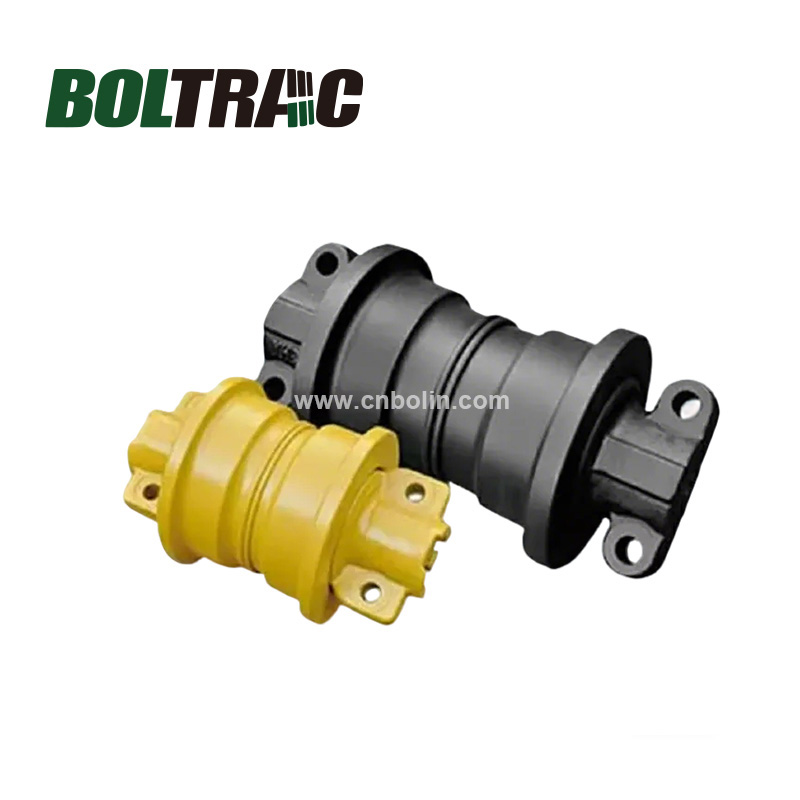
Harsh Working Conditions
Track rollers operate in environments where friction, heavy loads, and external impacts occur continuously. Construction sites, mining operations, and demolition areas frequently expose the undercarriage to abrasive materials such as sand, gravel, and broken rock. These particles gradually grind against the roller surface, wearing down protective layers and weakening the structural integrity of the component over time.
Uneven ground and sudden impacts can further increase mechanical stress. When equipment moves across rocky terrain or encounters falling debris, shock loads travel directly through the roller body and into the internal bearings. Repeated impacts accelerate metal fatigue and may eventually lead to cracks, deformation, or uneven wear patterns.
Working environments that typically accelerate roller wear include:
● Abrasive soil and gravel surfaces
● Rocky or compacted terrain
● High-impact areas such as quarries
● Continuous heavy-load excavation cycles
Machines operating in these environments often experience faster undercarriage wear compared with equipment used on softer or more stable ground.
Improper Track Tension
Track tension strongly influences how load and stress are distributed throughout the undercarriage system. When the track is overly tight, the rollers and track chain must overcome additional resistance during movement. This increased pressure raises friction levels inside the roller assembly, accelerating internal wear and reducing the component’s service life.
Loose tracks create a different type of problem. Excess slack allows the chain to move irregularly across the rollers, causing uneven contact points and unstable track alignment. As the track shifts from side to side, certain rollers carry more load than others, which results in uneven wear and additional stress on sprockets and idlers.
Common consequences of incorrect tension include:
● Uneven roller surface wear
● Higher vibration during machine travel
● Accelerated wear of track chains and sprockets
● Reduced overall undercarriage efficiency
Maintaining the correct track sag helps balance loads and ensures smoother movement across the roller system.
Poor Maintenance Practices
Operating conditions alone rarely cause premature roller failure. Maintenance routines play an equally important role in determining how long track rollers remain functional. Without regular inspections and lubrication, contaminants such as dust, water, and debris can gradually enter the roller assembly and damage internal bearings. Once lubrication becomes insufficient or contaminated, friction increases rapidly and internal parts begin to deteriorate.
Another common issue is debris accumulation around the undercarriage. Mud, stones, and compacted soil can become trapped between track components, creating additional resistance during movement. If these materials remain in place for long periods, they can restrict roller rotation and place unnecessary stress on the entire track system.
Effective maintenance practices typically include:
● Routine inspection for cracks or abnormal roller movement
● Monitoring roller diameter and wear patterns
● Maintaining proper lubrication levels
● Cleaning debris from the undercarriage after operation
Consistent inspection and cleaning routines help stabilize roller performance and reduce long-term undercarriage damage.
Conclusion
Track Roller performance strongly affects heavy equipment durability and operating efficiency. Using high-performance track roller solutions and proper maintenance can significantly extend machine lifespan while reducing downtime. Shandong Bolin Machinery Co., Ltd. provides durable track roller products designed for demanding construction and mining environments, helping operators improve equipment reliability and long-term operational value.
FAQ
Q: What does a Track Roller do in heavy equipment?
A: A Track Roller supports machine weight and guides track movement, ensuring stable load distribution across the undercarriage.
Q: How does Track Roller quality affect equipment lifespan?
A: A durable Track Roller reduces friction and uneven wear, protecting chains, sprockets, and other undercarriage components.
Q: How often should a Track Roller be inspected?
A: A Track Roller should be inspected every 100 operating hours for cracks, abnormal movement, or diameter wear.
Q: What causes premature Track Roller wear?
A: Track Roller wear commonly results from abrasive terrain, incorrect track tension, poor lubrication, or debris buildup.
Q: Can improper track tension damage a Track Roller?
A: Yes, incorrect tension increases stress on each Track Roller, accelerating bearing fatigue and uneven undercarriage wear.


