In the world of heavy machinery, the efficiency and reliability of the movement system are paramount. One of the key components that make tracked vehicles, such as excavators, bulldozers, and mining equipment, operate efficiently is the Drive Hydraulic Travel Motor Gearbox system. This integrated system is designed to ensure smooth motion, high torque output, and precise control under varying operating conditions. Understanding how this system works is essential for maintaining optimal performance in construction and mining operations.
In this article, we will explore the key components of the Drive Hydraulic Travel Motor Gearbox, how it functions, its advantages, and how to maintain it for long-lasting, efficient operation.
1. Overview of the Hydraulic Travel Motor Gearbox
What is a Hydraulic Travel Motor Gearbox?
The Hydraulic Travel Motor Gearbox is a crucial part of the drive system in tracked vehicles. It is responsible for transmitting hydraulic power to the tracks, enabling movement and speed control. The system integrates three main components:
Hydraulic Motor: Converts hydraulic fluid energy into mechanical motion.
Final Drive: Transfers power to the track system.
Gearbox: Regulates speed and torque to match the operational demands.
The combination of these components allows tracked vehicles to operate efficiently in challenging terrains, ensuring that the machinery can move heavy loads while maintaining control and stability.
Key Functions of Hydraulic Travel Motor Gearbox
The primary functions of the Drive Hydraulic Travel Motor Gearbox include:
Power Transmission: It ensures that hydraulic power is efficiently converted into mechanical motion to drive the tracks.
Torque Multiplication: The system multiplies the torque from the hydraulic motor to provide enough power for heavy-duty operations.
Speed Control: It regulates the speed of the tracked vehicle to ensure precise and safe movement.
Motion Control: The gearbox, in combination with the hydraulic motor, allows for smooth and controlled movement, even under heavy loads.
2. Key Components and Their Roles
Hydraulic Motor
Description and Functionality
The hydraulic motor is the heart of the hydraulic travel motor gearbox. It operates by converting the energy of the pressurized hydraulic fluid into mechanical power. This mechanical power is then used to rotate the drive shaft, which powers the rest of the system.
Power Source: Hydraulic motors are powered by pressurized fluid, which flows from the hydraulic pump. The amount of fluid pressure determines the speed and torque produced.
Torque Generation: Hydraulic motors generate significant torque, making them ideal for heavy-duty applications where high force is needed for movement.
Types of Hydraulic Motors
There are several types of hydraulic motors used in travel motor gearboxes, including:
Type of Hydraulic Motor |
Application |
Key Characteristics |
Gear Motors |
General industrial use |
Compact, reliable, and efficient. |
Vane Motors |
High torque applications |
Smooth operation, but slightly more complex. |
Piston Motors |
Heavy-duty machinery |
High efficiency and torque generation. |
Final Drive
Purpose and Function
The final drive is an essential component in transmitting power from the hydraulic motor to the tracks. It is designed to withstand high torque and ensure that the vehicle can move forward or backward efficiently.
Torque Distribution: The final drive distributes the mechanical power generated by the hydraulic motor to the tracks, ensuring proper movement.
Durability: It is built to endure the heavy loads and stress associated with large machinery operating in rugged environments.
Gearbox
Role of the Gearbox in the System
The gearbox plays a crucial role in adjusting the speed and torque of the final drive. It determines the ratio of the output speed and the torque, which allows the machinery to move at different speeds under various operational conditions.
Speed Control: Gearboxes adjust the rotational speed of the final drive based on the hydraulic power provided by the motor.
Torque Adjustment: The gearbox adjusts the torque, ensuring that the tracked vehicle can navigate both slow, high-torque maneuvers and fast, low-torque movements.
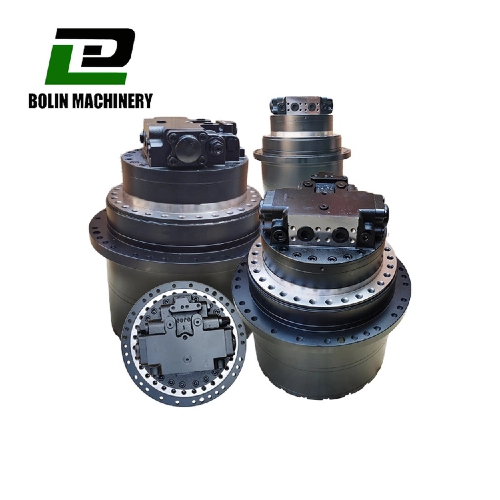
3. The Working Mechanism of Drive Hydraulic Travel Motor Gearbox
Hydraulic Fluid Dynamics
The hydraulic motor within the travel motor gearbox is powered by hydraulic fluid, which is pressurized by a hydraulic pump. The fluid flows into the motor, creating motion that powers the entire system. The flow rate and pressure of the fluid determine how fast the motor rotates and how much torque is produced.
Fluid Flow: Hydraulic fluid is pumped at high pressure through the motor, driving the gears or pistons inside the motor to create rotational movement.
Pressure Control: The pressure of the fluid is carefully controlled to match the desired speed and torque for the operation of the vehicle.
Power Transmission Process
The hydraulic motor generates rotational power, which is transferred to the gearbox. The gearbox then adjusts the speed and torque before sending it to the final drive. This process ensures that the tracked vehicle can move at varying speeds while maintaining adequate power to handle heavy loads.
Hydraulic Motor: Receives pressurized fluid and converts it into rotational motion.
Gearbox: Modifies the speed and torque to suit operational needs.
Final Drive: Transfers power to the tracks, enabling movement.
Motion Control
Motion controlis achieved through the integration of the hydraulic motor and gearbox. The speed and direction of the vehicle are controlled by adjusting the flow and pressure of the hydraulic fluid, which in turn adjusts the power transmitted to the tracks.
Speed Regulation: The gearbox modulates the speed of the vehicle by adjusting the ratio of the power delivered from the motor to the final drive.
Directional Control: Motion control also involves adjusting the flow of hydraulic fluid to ensure smooth, controlled movements.
4. Advantages of Using Hydraulic Travel Motor Gearboxes in Heavy Machinery
Increased Efficiency
Hydraulic systems are known for their high efficiency. The Drive Hydraulic Travel Motor Gearbox combines hydraulic technology with mechanical power transmission, ensuring optimal power usage.
High Torque at Low Speed: Hydraulic motors generate significant torque at low speeds, making them ideal for heavy-duty operations.
Fuel Efficiency: Hydraulic systems typically consume less fuel than comparable mechanical systems, improving the overall energy efficiency of the machinery.
Durability and Reliability
Hydraulic systems, including the motor gearbox combination, are designed to withstand harsh environments. These systems are robust and capable of handling extreme temperatures, dust, and heavy-duty workloads.
Long Service Life: With proper maintenance, these systems offer extended operational lifespans, reducing the frequency of replacements and downtime.
Robust Design: The components are built to endure wear and tear, especially in the demanding conditions of construction and mining operations.
Precision and Control
One of the key benefits of the hydraulic travel motor gearbox system is its ability to provide precise speed and directional control. This is particularly important in applications where movement must be controlled with high accuracy.
Fine-Tuned Movements: The gearbox allows for smooth speed adjustments, which is critical for tasks requiring precision.
Stable Operation: The hydraulic motor gearbox system provides consistent power delivery, ensuring stable operation even in challenging conditions.
5. Maintenance Considerations for Hydraulic Travel Motor Gearboxes
Regular Inspection and Fluid Checks
Maintaining the hydraulic fluid at proper levels and ensuring it is clean are crucial for the longevity and efficiency of the system.
Fluid Quality: Over time, hydraulic fluid can degrade, losing its ability to efficiently transmit power. Regular fluid checks and replacements are necessary to maintain optimal performance.
Monitoring Wear and Tear
The components of the hydraulic motor gearbox system are subject to wear and tear, especially under heavy usage. Regular inspection of parts like gears, bearings, and seals is important to prevent failure.
Signs of Wear: Unusual noises, vibrations, or decreased efficiency can be signs of mechanical wear, necessitating repairs.
Proper Lubrication
Lubricating the components of the motor and gearbox is vital for minimizing friction and preventing overheating.
Lubricant Types: Use the recommended lubricants for each component to ensure smooth operation and to avoid damage to critical parts.
6. Future Trends in Hydraulic Travel Motor Gearboxes
Innovations in Efficiency
Advancements in material science, fluid dynamics, and motor technology are continuously improving the efficiency of hydraulic travel motor gearboxes. Modern systems are being designed to deliver higher torque with lower fluid consumption.
Energy-Efficient Materials: The use of lightweight yet durable materials is becoming more prevalent in the design of these systems, improving both performance and fuel efficiency.
Environmental Considerations
As the demand for sustainability increases, manufacturers are focusing on reducing the environmental impact of hydraulic systems.
Reduced Emissions: New technologies are being developed to reduce the emissions associated with hydraulic systems, helping companies comply with environmental regulations.
7. Conclusion
The Drive Hydraulic Travel Motor Gearbox system is crucial for the efficient operation of tracked heavy machinery. By converting hydraulic fluid energy into mechanical power, this system allows construction and mining machinery to perform reliably under demanding conditions. With proper maintenance, these systems offer long-lasting performance, significantly enhancing the productivity and efficiency of the equipment.
At Shandong Bolin Machinery Co., Ltd., we specialize in providing high-quality hydraulic travel motor gearboxes designed to meet the specific needs of heavy machinery. Our advanced solutions are engineered for durability and efficiency, ensuring your machinery operates at its best for longer periods. Whether you are looking for replacements, custom solutions, or comprehensive maintenance support, we offer tailored services that help optimize your equipment’s performance.
For more information about our products and services, or to discuss your specific requirements, we invite you to get in touch with us. Our team of experts is here to assist you in selecting the ideal solution for your needs and to ensure your machinery operates at peak performance.
8. FAQ
What is the role of the hydraulic motor in a travel motor gearbox?
The hydraulic motor converts hydraulic fluid into rotational power, which drives the movement of tracked machinery.
Why is the final drive important in a hydraulic travel motor gearbox system?
The final drive transfers the hydraulic power generated by the motor to the tracks, ensuring efficient movement and high torque.
How do hydraulic travel motor gearboxes contribute to efficiency in construction machinery?
They enable high torque at low speeds, reducing fuel consumption and increasing overall machinery efficiency.
What are some common signs that a hydraulic travel motor gearbox needs maintenance?
Common signs include fluid leaks, decreased efficiency, unusual noises, and abnormal vibrations, which indicate that the system needs attention.


